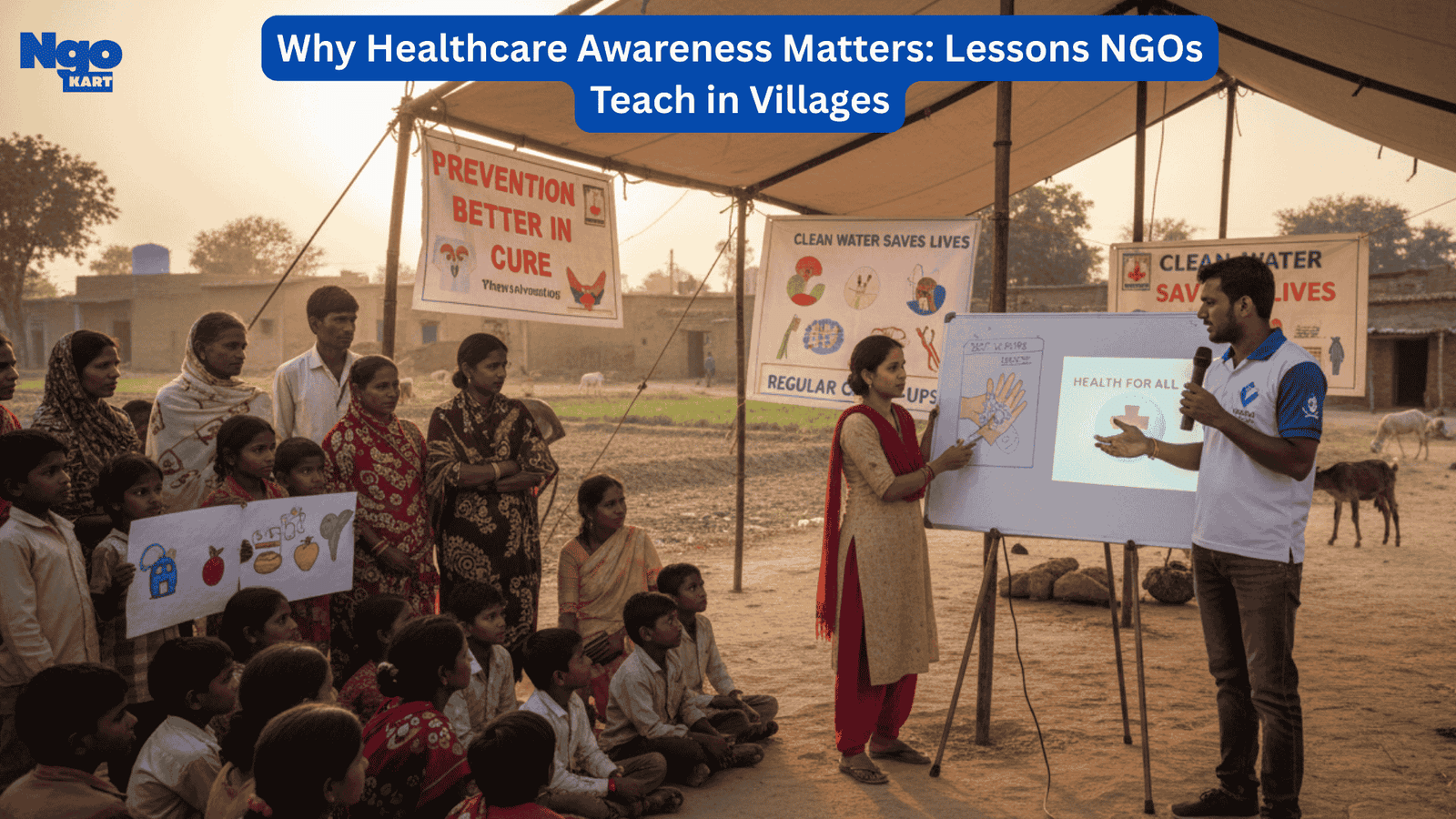
In many Indian villages, people work hard every day to support their families. But when it comes to health, many are unaware of basic habits that can prevent illness. A lack of information often leads to serious diseases, unnecessary suffering, and avoidable medical expenses.
This is where NGOs step in. Their awareness programs teach simple, life-changing lessons that help families live healthier and safer lives. This article explains in simple and heartfelt words why healthcare awareness matters and how NGOs create meaningful change in villages.
🌿 Why Healthcare Awareness Is Important in Villages
Healthcare awareness means knowing how to stay healthy, prevent disease, and recognize danger signs early. For many rural families, such knowledge is limited.
Common challenges include:
- No nearby hospitals
- Lack of education
- Dependence on home remedies
- Delay in seeking treatment
- Use of unsafe practices
- Limited knowledge about hygiene
Without awareness, small problems can turn into serious illnesses. NGOs help prevent this through education and guidance.
🏥 NGOs Bring Knowledge Where It Is Needed Most
NGOs visit villages with trained staff, volunteers, doctors, and educators. They organize workshops, home visits, group meetings, and school sessions. Their goal is simple: empower people with knowledge.
They teach villagers how to:
- Keep their surroundings clean
- Drink safe water
- Wash hands properly
- Eat balanced meals
- Identify symptoms of common diseases
- Seek early medical care
These lessons protect families from many preventable illnesses.
🧼 Teaching the Importance of Hygiene and Clean Water
Many rural families still use contaminated water because clean water is hard to access. Poor hygiene leads to infections, stomach problems, and serious diseases like typhoid and cholera.
NGOs teach:
- How to boil or filter water
- Why washing hands before eating matters
- Safe water storage techniques
- Importance of using toilets
- Waste disposal methods
Simple habits like handwashing can save countless lives.
🍛 Spreading Awareness About Nutrition and Healthy Eating
Malnutrition is common in villages, especially among children and pregnant women. Lack of proper knowledge results in weak immunity and long-term health issues.
NGOs organize nutrition sessions where families learn:
- Affordable healthy foods
- Importance of vegetables and protein
- How to prepare nutritious meals
- Effects of junk food
- Benefits of iron-rich foods to prevent anemia
They often distribute nutrition kits or teach families how to grow vegetables at home.
🩺 Early Detection Saves Lives — A Lesson NGOs Emphasize
One of the biggest problems in villages is delaying treatment. People often wait until an illness becomes severe before visiting a doctor. This delay makes simple problems dangerous.
NGOs teach villagers to seek early medical help for:
- Fever
- Continuous cough
- Body pain
- Breathing difficulty
- Wounds that do not heal
Early diagnosis prevents complications and reduces treatment costs.
👩⚕️ Special Focus on Women’s Health
Women in villages often stay silent about their health issues because of shyness, lack of knowledge, or social restrictions.
NGOs create safe spaces for women and teach:
- Menstrual hygiene
- Pregnancy care
- Nutrition during pregnancy
- Symptoms of anemia
- Early signs of breast and cervical cancer
These lessons help women stay healthy and reduce risks during pregnancy.
👶 Guiding Parents on Child Health and Immunization
Many parents are unaware of the importance of vaccinations, growth monitoring, or balanced diets for children.
NGOs teach parents about:
- Immunization schedules
- Common childhood diseases
- Importance of breastfeeding
- Nutrition for school-age children
- Hygiene habits for kids
Such awareness leads to healthier children and fewer medical emergencies.
🧠 Mental Health Awareness — Breaking the Silence
Mental health is rarely discussed in villages. Many people suffer quietly due to stress, poverty, and family pressure.
NGOs offer:
- Counselling support
- Awareness sessions
- Safe spaces to talk
- Training on stress management
These programs help people understand that mental health is as important as physical health.
🚑 Preparing Villagers for Emergencies
When emergencies like snake bites, injuries, or sudden illnesses occur, many villagers panic or use unsafe home remedies.
NGOs teach basic first-aid practices:
- How to stop bleeding
- What to do during a snake bite
- Safe handling of burns
- When to rush to a hospital
- Emergency helpline numbers
This knowledge can save lives before professional help arrives.
📣 Building Community Health Leaders
Many NGOs train local volunteers, often women, to act as community health workers. These leaders become trusted health guides in their villages.
They help by:
- Visiting homes
- Conducting awareness talks
- Identifying health risks
- Connecting families to doctors
- Supporting pregnant women
This creates a strong and sustainable health network within the village.
🌟 Real Change Begins With Awareness
Healthcare awareness transforms communities. When people understand how to stay healthy, the entire village becomes stronger.
Impact of awareness:
- Fewer diseases
- Healthier children
- Safe pregnancies
- Better hygiene
- Less medical expense
- More confidence in healthcare
Knowledge empowers families to take care of themselves without fear.
🤝 How You Can Support NGO Awareness Programs
You can help by:
- Volunteering in awareness drives
- Donating educational materials
- Supporting health camps
- Sharing NGO work on social media
- Funding clean water or nutrition programs
Even small support makes a big difference.
💚 Final Thoughts
Healthcare awareness is not just information—it is protection, strength, and hope. NGOs bring this awareness to villages where knowledge is limited and healthcare is difficult to access. Their lessons help families prevent disease, make better decisions, and live healthier lives.
When we support these NGOs, we help create communities that are informed, confident, and ready to face health challenges with courage.
A healthier village begins with awareness, and awareness begins with compassion.