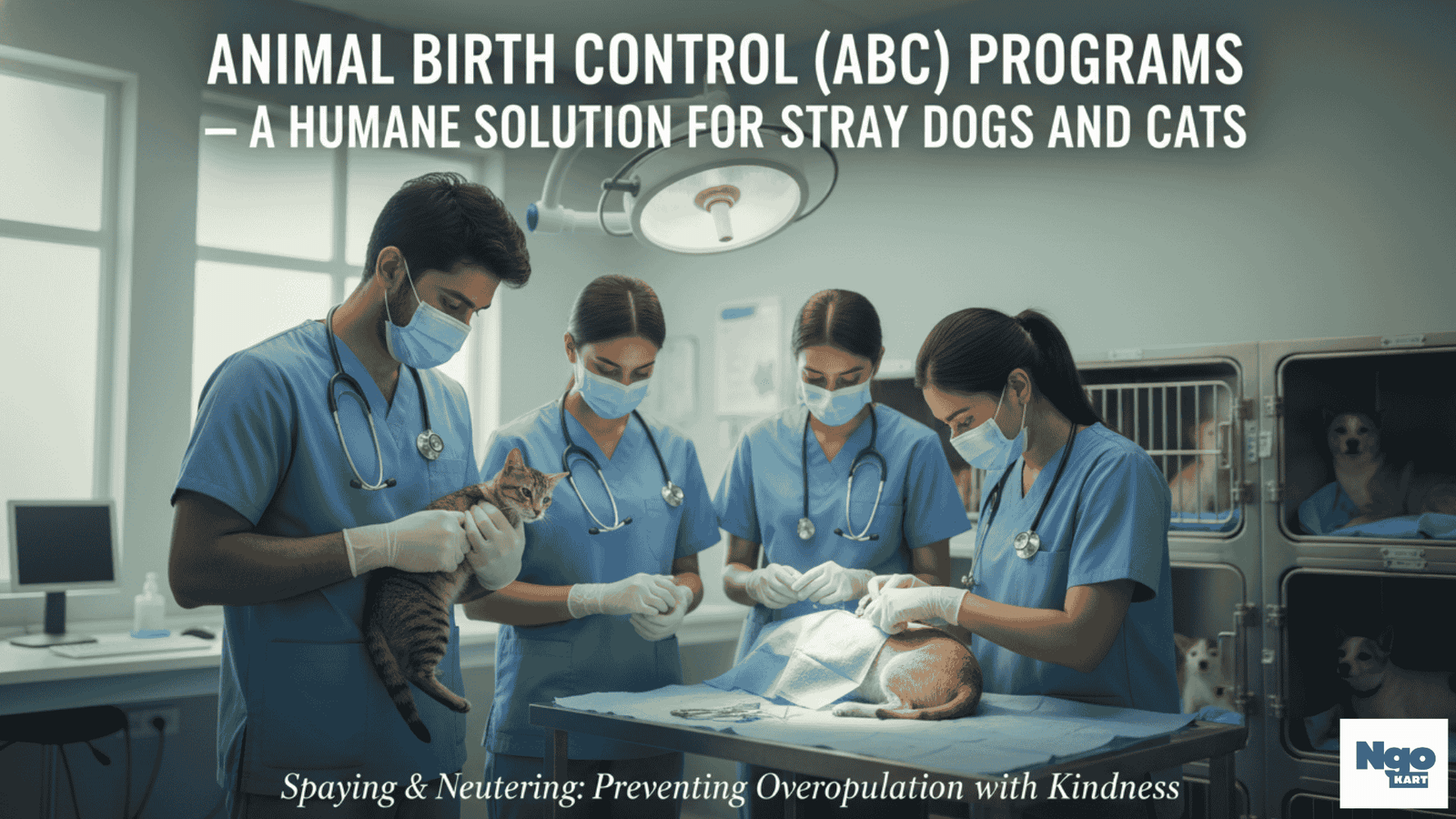
Across cities and villages, stray dogs and cats live difficult lives. They struggle for food, shelter, medical care, and safety. As their population grows, so do the challenges — increased accidents, diseases, fights, and human-animal conflict. For decades, societies across the world have searched for a solution that is compassionate, effective, and sustainable. This brings us to one of the most important initiatives in animal welfare: Animal Birth Control (ABC) programs.
ABC programs are not just a method of population control; they are a lifeline for stray animals. They ensure healthier, safer communities — both for animals and for people.
What Is an Animal Birth Control (ABC) Program?
ABC programs involve the humane sterilization and vaccination of stray dogs and cats. Instead of removing animals from their environment — which is ineffective and inhumane — ABC programs allow them to live safely in their communities while preventing uncontrolled breeding.
The ABC process includes:
- Humanely capturing stray animals
- Providing sterilization surgery (spaying/neutering)
- Vaccination, especially against rabies
- Post-operative care and rest
- Returning animals to their original location
This approach is recommended globally by animal welfare experts, including the World Health Organization (WHO).
Why ABC Programs Are Essential
Uncontrolled breeding leads to larger stray populations, which results in:
- More street fights and injuries between animals
- Higher risk of diseases like rabies
- Increased human-animal conflict
- Malnutrition due to food scarcity
- Poor overall health of dogs and cats
By implementing ABC, NGOs and local authorities help create safer, healthier neighborhoods. Sterilized animals live longer, calmer, and healthier lives.
How ABC Programs Are Carried Out
1. Identifying Stray Animals
Volunteers and community feeders help NGOs identify unsterilized strays. These are usually animals without ear notches (a sign of sterilization).
2. Humane Capture
Trained rescuers gently capture dogs and cats using safe methods. The goal is to avoid stress or injury.
3. Surgical Sterilization
Veterinarians perform spay (female) or neuter (male) surgeries under anesthesia. This prevents future litters and reduces aggressive behavior.
4. Rabies Vaccination
Every dog or cat under the ABC program receives an anti-rabies shot, significantly improving public safety.
5. Post-Operative Care
Animals recover in shelter facilities for a few days. They receive pain medication, food, and monitoring to ensure safe healing.
6. Returning Animals to Their Territory
Once recovered, animals are released back to their original location. They recognize familiar surroundings and continue to live peacefully.
This process breaks the breeding cycle and ensures stability within stray animal communities.
Benefits of ABC Programs
1. Humane Population Control
ABC is the only scientifically proven and ethical method to reduce stray populations over time. It avoids cruelty and respects every life.
2. Reduced Aggression and Calmer Behavior
Sterilized animals are less territorial, reducing fights, bites, and public safety concerns.
3. Prevention of Rabies
Vaccinated dogs and cats protect entire neighborhoods from rabies outbreaks, benefiting both humans and animals.
4. Improved Health for Stray Animals
Sterilization reduces risks of infections, tumors, and reproductive diseases. Animals live longer, healthier lives.
5. Stable and Safer Communities
Returning sterilized animals to their locations prevents new, unsterilized animals from entering the area, maintaining balance.
The Emotional Impact of ABC Programs
Behind every ABC surgery is a story of a stray animal that deserves care. Many dogs who once suffered litter after litter finally get relief. Cats who lived in fear of aggression regain peace. Community feeders feel joy seeing their animals healthier and calmer.
NGOs and volunteers witness heartbreaking situations but also see miracles — frightened dogs trusting again, injured animals healing, and street pets living with dignity.
Challenges Faced by ABC Programs
Despite their importance, ABC programs struggle with:
- Limited funding for surgeries and medical care
- Shortage of trained veterinarians
- High demand from urban and rural areas
- Misunderstanding or resistance from communities
- Large populations that require long-term efforts
Still, NGOs continue tirelessly because they believe every animal deserves compassion and a healthier life.
How You Can Support ABC Programs
Even small contributions make a big difference. You can help by:
- Donating toward sterilization surgeries
- Helping NGOs identify unsterilized dogs and cats
- Transporting animals for surgery if possible
- Feeding and caring for animals during recovery
- Educating your community about the importance of ABC
- Supporting animal welfare organizations on social media
Your compassion can help save hundreds of animals from suffering and ensure peaceful coexistence in your community.
Conclusion: ABC Programs Create a Kinder, Healthier World
Animal Birth Control is more than a medical program — it is an act of love, humanity, and responsibility. By choosing humane sterilization and vaccination, we choose a world where animals are not feared or harmed but cared for and respected.
NGOs, veterinarians, volunteers, and compassionate citizens together create a future where stray dogs and cats live healthier, safer, and happier lives. When we support ABC programs, we support a kinder world where every life matters.