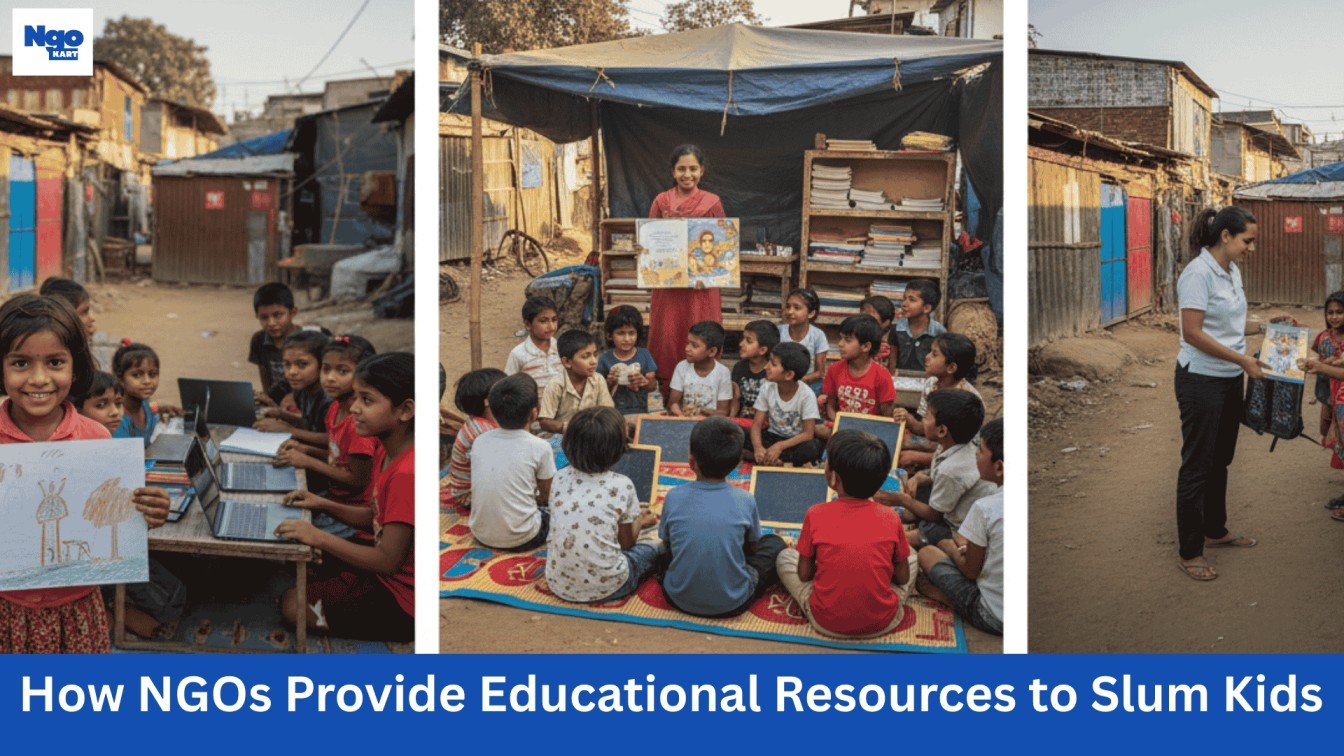
The chalk dust hangs in the air, catching the late afternoon sun slanting through the barred window. In this modest community hall, twenty children are bent over notebooks, not a phone in sight. The only sound is the gentle scratch of pencils and the occasional whispered question to Ravi, the volunteer tutor. Ten years ago, Ravi sat where they sit. He knows the weight of falling behind in a crowded classroom, the sinking feeling of a math problem you’re too embarrassed to ask the teacher to explain a second time. This scene, quietly unfolding in neighborhoods worldwide, is the frontline of educational equity. If you’ve ever wondered how to help beyond a one-time donation, understanding the ecosystem of these free learning centers—often spearheaded by local trusts and collectives—is the perfect place to start.
The Gap That School Alone Can’t Fill
We assume that a seat in a classroom equals an education. But for a child from an economically strained background, the school day is often just the beginning of the struggle.
When Home Isn’t a Conducive Classroom
Imagine if your “study desk” was the corner of a single-room home, with the television blaring, younger siblings crying, and the mental burden of your family’s financial anxiety as a constant backdrop. Completing homework is a Herculean task. Mastering a concept you barely grasped in a class of fifty is nearly impossible. Here’s what happens next: the child falls silently behind, week by week, until the gap is so wide they internalize a story of failure. They don’t drop out in a dramatic moment; they slowly fade away from the academic mainstream.
The Hidden Curriculum of Confidence
The challenge isn’t solely academic. It’s psychosocial. In a large school, a quiet child from a marginalized community can easily become invisible. They may face unconscious bias or simply lack the assertive language to ask for help. A 2024 study by the National Coalition for Educational Equity noted that supplemental academic support, when paired with mentorship, showed a 40% greater improvement in long-term retention rates than academic intervention alone. The need isn’t just for tuition; it’s for a safe, affirming space where a child’s voice is heard and their potential is mirrored back to them by a caring adult.
The NGO Blueprint: Building Centers of Belonging
Effective free tuition programs run by nonprofits are not merely photocopies of school. They are carefully designed social and academic sanctuaries. Their magic lies in their hybrid model of instruction and emotional scaffolding.
Case Study: The “Shiksha Safalata” (Education Success) Circle, Kanpur
In the textile colony neighborhoods of Kanpur, a local foundation identified a crisis: brilliant children were consistently failing high school board exams in science and mathematics. Their diagnostic revealed it wasn’t ability, but a crippling fear of exams and a lack of structured revision.
Their response was the “Circle” model:
- Location with Intention: They secured a dedicated, quiet space within a trusted community religious center, open from 4-7 PM. Proximity and safety were paramount.
- “Near-Peer” Tutoring Corps: They recruited and rigorously trained high-performing undergraduate students from the same locality. These tutors, having recently aced the same exams, were relatable heroes. They taught not just concepts, but how to study and how to take tests.
- The “Concept-Clinic” Approach: The first hour was dedicated to targeted problem-solving. The second hour was a structured, silent self-study period, building discipline. The final 30 minutes were for group discussions and “motivation talks”—informal sessions where tutors shared their own struggles and strategies.
- Family Liaison: A part-time social worker held monthly chai meetings with parents, not to complain, but to coach them on how to create a supportive environment at home, even if they were illiterate themselves.
Within three years, the pass rate for students in the Circle for two consecutive years was 98%. More tellingly, university enrollment from the area increased by 300%. This model demonstrates how a charitable initiative’s real product isn’t just better grades—it’s restored agency and rewritten community narratives.
Navigating Support: How You Can Be a Force Multiplier
The desire to help a free tuition center is admirable. The key is to support in a way that strengthens their unique model, rather than imposing an outsider’s idea of what they need.
A Donor’s Dilemma: Resources vs. Relationship
A common quandary I’ve faced with well-meaning supporters is the offer to fund “better infrastructure”—new tablets, air conditioners, fancy furniture. While sometimes useful, this can misalign with a center’s core philosophy of simplicity and replicability. The most transformative contribution is often unrestricted funding for the tutor stipends that allow a gifted local student to teach instead of taking a retail job, or for the nutritional snacks that keep children focused.
Your Pragmatic Checklist: 5 Questions for an Educational NGO
- What’s the Pedagogy, Not Just the Place? Ask how they teach. Do they have a curriculum, trained facilitators, and a method to assess individual learning gaps, or is it just supervised homework time?
- Who is on the Floor? Are the tutors trained volunteers or paid, qualified community members? Investment in local talent is a sign of sustainable, respectful practice.
- How Do They Measure “Success”? Look beyond pass rates. Do they track student confidence, school attendance, parental engagement, or progression to higher education? According to NGO sector guidelines, mixed-method outcomes are a marker of depth.
- What is the Family’s Role? The best programs intentionally engage caregivers. Ask how they bridge the home-learning gap, especially with parents who may be non-literate.
- What is their Sustainability Plan? Is the goal to run the center forever, or to build the capacity of local public schools and eventually shift their role? Organizations with a long-term vision for their own obsolescence often have the sharpest focus.
A Lesson Learned: The Danger of the “Success Story”
Early in my career, we showcased a star student, Aarav, who went from our center to a top engineering college. Donors loved it. But the unintended consequence was brutal. It created an internal hierarchy where only “Aaravs” were celebrated, and pressure mounted on other children to replicate his path. We learned that celebrating only conventional, top-tier academic success can invisibly fail the child who, thanks to our support, moves from failing to passing, or finds the confidence to become a skilled electrician. Now, we celebrate a spectrum of victories: consistent attendance, a child teaching a concept to a peer, a parent attending a meeting. The lesson? Measure your impact in human dignity, not just in trophies.
Conclusion: Becoming Part of the Ecosystem
Supporting a free tuition center is not about funding a service; it’s about investing in a community’s own intellectual infrastructure. It’s a recognition that talent is universally distributed, but opportunity is not. Your most powerful roles are as a validator (verifying and amplifying good work), a sustainer (providing reliable core funding), and a connector (linking the organization to pro-bono expertise, like a lawyer for registration or a designer for worksheets). Visit a center, not as a benefactor, but as a humble observer. Listen to the tutors. See the focus in the children’s eyes. Then, channel your support to reinforce the delicate, powerful alchemy that happens there every afternoon—the alchemy of transforming uncertainty into capability, one patient explanation at a time.
NGO-Focused FAQ: Understanding the Model
Q1: How do free tuition centers avoid creating a dependency or parallel education system?
The best practices, as outlined in community education frameworks, emphasize complementarity, not competition. Effective centers coordinate with local school teachers (where possible), focus on foundational concept clarity and exam preparation that the mainstream system may lack time for, and aim to bolster the child’s ability to thrive within the formal school. Their goal is to make the child independently successful in school, not perpetually reliant on the center.
Q2: Where does financial support typically go in a well-run tuition center program?
In a transparent operation, funds are typically allocated across: Program Delivery (stipends for tutors, learning materials, occasional educational outings), Operational Essentials (rent for the space, utilities, basic maintenance), and Program Management (a coordinator’s salary for quality control, training, and family engagement). As reported by charity assessment groups, a significant portion (often 70-85%) should be directed to program and direct community costs.
Q3: What’s a major operational challenge these centers face that isn’t obvious to outsiders?
Tutor burnout and attrition is a silent crisis. The work is emotionally demanding and often poorly paid. A center’s health is less about its furniture and more about how it supports, trains, and retains its teaching staff. Donors can ask about tutor well-being initiatives, career development opportunities, and how the center plans for tutor succession.
Q4: Is volunteering as a tutor the most helpful thing I can do?
It can be, if you are committed, trained, and in it for the long haul. A revolving door of short-term volunteers can disrupt children who need consistent relationships. Often, more impactful support for a professional is offering indirect skills: managing their website, helping with data analysis of student progress, or sourcing affordable, high-quality learning resources. Always take your cue from the organization’s stated needs.
Q5: How can I verify the credibility of a small, hyper-local free tuition NGO?
Conduct a “Three-Lens Verification”:
- Governance Lens: Request their registration details and ask about their advisory committee. Is there a local school principal, a respected elder, or a development professional involved in guidance?
- Field Reality Lens: Insist on a scheduled visit to observe a session. Talk to the coordinator and, with permission, to a few parents. Does the stated mission match the on-ground atmosphere?
- Financial Transparency Lens: Ask for a simple income-expenditure statement for the last year. A credible grassroots organization, even if small, should be able to show you how they account for community funds. Their willingness to be open is a primary indicator of integrity.