Homeless people are among the most vulnerable members of society. They sleep on streets, footpaths, bus stands, and railway stations—often without food, safety, or protection from weather. Their lives are filled with struggles most of us never see closely. But one thing they lack the most is good health.
Without shelter, clean water, or medical help, even a small illness can become dangerous. This is why the role of NGOs becomes incredibly important. With compassion and dedication, they step in to provide support, care, and dignity to those who have no one else to depend on.
This article explains, in simple and heartfelt language, the health challenges homeless people face and how NGOs bring healing and hope to their lives.
🌧️ The Harsh Reality of Life on the Streets
Living without a home means living without protection. Homeless people face extreme weather—burning summers, heavy rains, and cold winters. Their bodies suffer from continuous exposure.
They face challenges like:
- No clean place to sleep
- No safe drinking water
- No toilets or bathing facilities
- Unsafe surroundings
- Poor nutrition
- High risk of infections
These conditions lead to serious health problems that often remain untreated.
🩺 Common Health Problems Among Homeless People
Without basic needs, homeless individuals develop many health issues. Some of the most common challenges include:
1. Respiratory Problems
Living in polluted areas and breathing dust constantly causes cough, asthma, and lung infections.
2. Skin Diseases
Without clean clothes or the ability to bathe regularly, many develop fungal infections, rashes, and wounds that do not heal.
3. Malnutrition and Weak immunity
Irregular meals or surviving only on leftover food leads to malnutrition. Their immunity becomes weak, making them prone to illnesses.
4. Injuries and Accidents
Sleeping on pavements and roads puts them at risk of accidents. Many walk barefoot and suffer cuts, infections, and fractures.
5. Mental Health Struggles
Homelessness often causes loneliness, depression, anxiety, and trauma. Many struggle silently with emotional pain.
6. Chronic Illnesses
Diseases like diabetes, high blood pressure, and tuberculosis remain untreated due to lack of access to healthcare.
These challenges make everyday survival difficult.
🍛 Lack of Nutrition — The Biggest Enemy
Homeless people rarely get proper meals. Most days, they depend on:
- Leftovers from hotels
- Occasional donations
- Cheap roadside snacks
Poor nutrition weakens their bodies, reduces healing capacity, and increases the risk of infections. Children, women, and elderly people suffer the most.
NGOs understand this and step forward with food distribution programs that provide fresh, healthy meals.
🚑 How NGOs Step In and Change Lives
NGOs work tirelessly to support homeless communities. Their help is not limited to food; they provide care, dignity, and a path towards recovery.
Here’s how NGOs make a difference:
🩺 1. Providing Free Medical Camps
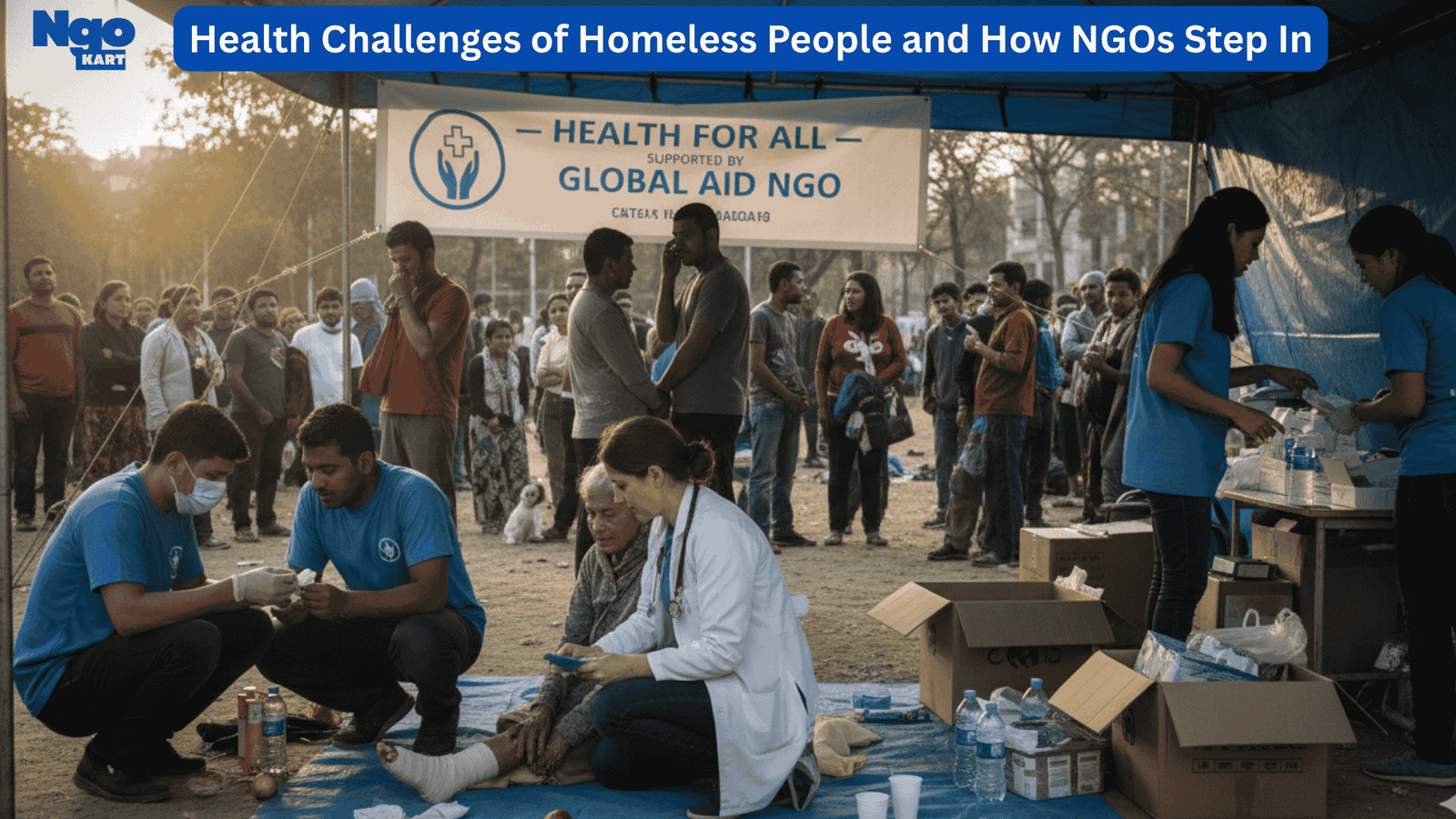
NGOs conduct medical checkups on footpaths, slum areas, railway stations, and shelters. They bring doctors and nurses to the streets so homeless people don’t have to go anywhere.
These camps offer:
- Health checkups
- Free medicines
- Wound care
- Screening for diabetes and blood pressure
- Treatment for skin infections
- TB and HIV awareness
For many homeless people, this is the first time they meet a doctor in years.
🍲 2. Serving Fresh, Nutritious Meals
Food is the most basic necessity. NGOs provide:
- Breakfast
- Lunch
- Evening meals
- Water and snacks
Some NGOs also distribute:
- Fruits
- Milk for children
- Nutrition kits
These meals bring strength and dignity to people who often go hungry.
3. Offering Shelters and Safe Spaces
Not all homeless people have a place to sleep. NGOs run night shelters where they provide:
- Bedding
- Clean washrooms
- Bathing facilities
- A safe environment
A night of peaceful sleep can change a person’s entire outlook.
🧼 4. Hygiene Support
NGOs give hygiene kits that include:
- Soap
- Shampoo
- Toothbrush and paste
- Sanitary pads for women
- Towels
- Masks
They also conduct awareness sessions on hygiene and sanitation.
5. Counselling and Mental Health Support
Loneliness, trauma, and emotional pain affect homeless individuals deeply. NGOs provide:
- Counselling sessions
- Stress-relief activities
- Support groups
- Safe spaces to talk
This emotional support helps people rebuild hope.
👶 6. Supporting Homeless Children
Children living on the streets face the highest risk. NGOs focus on:
- Nutrition
- Education
- Healthcare
- Protection from abuse
- Rehabilitation programs
These efforts give children a chance for a better future.
🧭 7. Helping People Rebuild Their Lives
Some NGOs go beyond temporary help. They assist homeless people with:
- Skill development
- Job placements
- Addiction recovery programs
- Identity documents (Aadhaar, voter ID)
- Family reunion programs
This long-term support helps individuals become independent again.
🌟Why NGO Support Truly Matters
Support from NGOs brings more than just services—it brings humanity.
Their work matters because they:
- Save lives with timely medical help
- Reduce hunger
- Protect people from dangerous weather
- Restore self-respect
- Give homeless individuals a sense of belonging
Most importantly, NGOs remind them that they are not forgotten.
🤝How You Can Help
You can also support the homeless through NGOs by:
- Donating blankets or clothes
- Sponsoring meals
- Volunteering in outreach programs
- Donating medicines and hygiene kits
- Sharing NGO campaigns online
Every small action makes a big difference.
💛 Final Thoughts
Homeless people face health challenges that most of us never imagine. Their struggles are constant and painful, but NGOs bring hope into their lives with kindness and care. Through medical camps, food distribution, shelters, counselling, and education, NGOs help them stand again—with dignity.
Supporting these organisations is not just charity; it is a way of building a compassionate society where every life matters, no matter where they sleep at night.