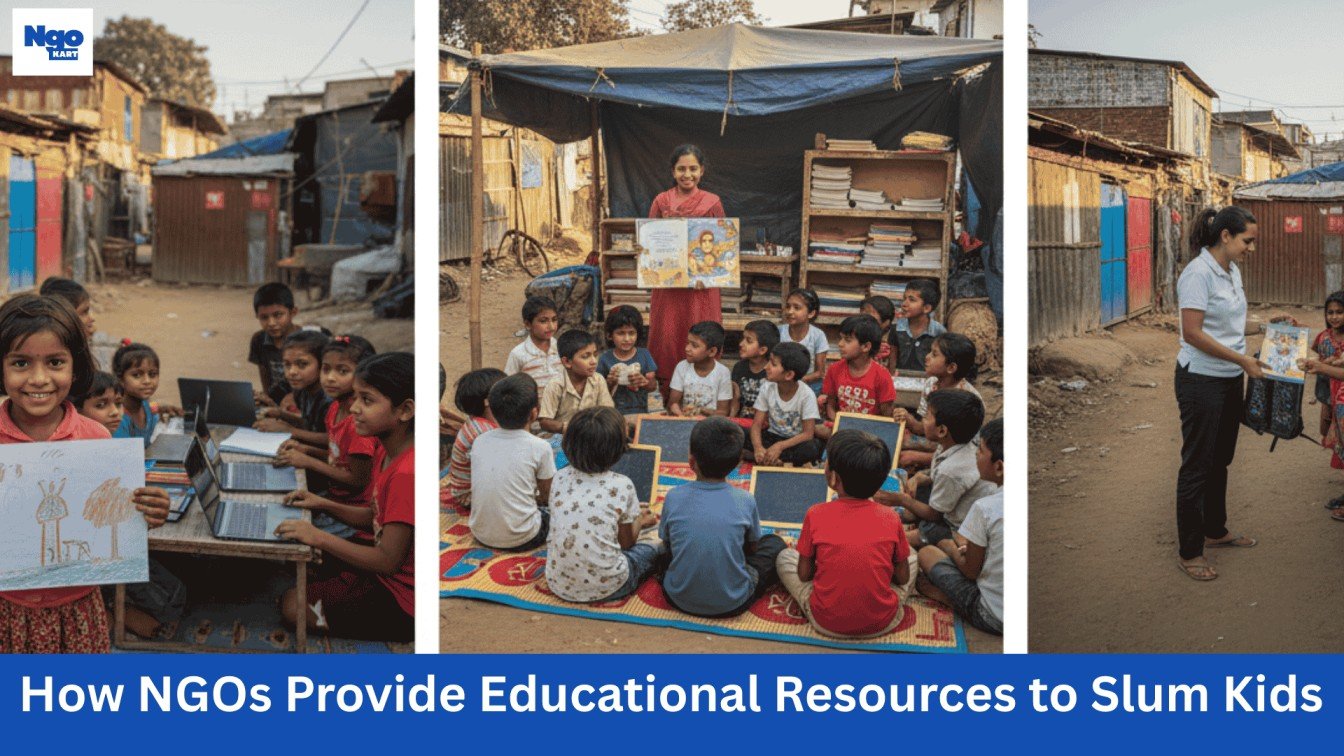
Support Poor Children Education: The Quiet Work of Community Organizations
The first time I stepped into the narrow lanes of a sprawling urban slum to meet a community-based organization, the sound hit me first. Not the expected silence of deprivation, but a vibrant, overwhelming cacophony of life—vendors calling, radios playing, children laughing. And then I saw them: a group of kids in a tiny, rented room, their faces intent under a single, dangling bulb, practicing the alphabet on reused cement bags. Their classroom had no blackboard, no smart screen, no library. What it had was a determined local volunteer and a profound, unwavering will to learn. This scene, replicated in countless informal settlements worldwide, is where the real work of educational equity begins. If you’re looking for how to help, it starts not with pity, but with understanding this grassroots alchemy.
The Landscape of Lack: It’s More Than Just Books
We see “slum kids” and think the solution is simple: build a school, send books. But after fifteen years in this sector, I’ve learned the barriers are layered, like the cramped, makeshift homes themselves.
When Home Isn’t a Haven for Homework
Imagine if your study desk was a shared floor space, the lighting poor, and the priority was fetching water or minding a younger sibling. Formal education becomes a distant, almost irrelevant concept. The challenge for charities isn’t just academic instruction; it’s about creating a cognitive and physical space where learning can even be contemplated. A 2024 report by Urban Rights India highlighted that over 60% of children in such settings lack any dedicated space to study, directly correlating with dropout rates after primary school.
The Credential Gap and The Trust Bridge
Here’s what happens when well-meaning outsiders arrive with resources but no relationships: nothing sustainable. The most significant resource a credible foundation provides isn’t material—it’s trust. Parents working daily wage jobs are rightfully skeptical. Will this program last? Is it safe? Will it help my child get a real certificate, not just keep them busy? An NGO’s first and most crucial investment is time, spent listening to mothers at communal taps and fathers at tea stalls, building a bridge of credibility long before the first lesson is taught.
How Grassroots Organizations Build Classrooms Without Walls
The effective ones—the trusts and collectives making a decade-deep impact—operate on a principle of radical contextualization. They don’t replicate urban elite schools; they reimagine education within the community’s reality.
Case Study: The “Mohalla Classroom” Initiative, Mumbai
Let me tell you about a model I’ve watched evolve in Central Mumbai. Faced with overcrowded municipal schools and high absenteeism, a local trust didn’t lobby for a new building. They created a network of “Mohalla Classrooms.”
- Leveraging Existing Space: They identified respected women in the community who had a small, stable room in their home. This became the after-school learning center—familiar, safe, and within the labyrinth of lanes.
- Hyper-Local Tutors: They recruited and trained neighborhood youth who had just completed Class 12 or college. These “study champions” understood the local dialect, the specific struggles, and became immediate role models.
- Curriculum Anchored in Reality: Lessons used local market prices for math, mapped community sanitation points for geography, and incorporated folk stories into language lessons. The goal was to make learning immediately relevant.
- Integrated Welfare Liaison: The tutors were also trained to spot signs of malnutrition, health issues, or child labor, and could connect families to government schemes or medical camps run by partner nonprofits.
This model’s brilliance is its embedded sustainability. It’s community-owned, low-cost, and scalable. It demonstrates how to truly educate for slum kids—by meeting them where they are, literally and figuratively.
From Concern to Constructive Support: A Guide for the Ethically-Minded
Your impulse to contribute is vital. Channeling it effectively ensures you empower, not disrupt. The most common dilemma I hear from potential supporters is, “How do I know my contribution won’t be wasted?”
Your Pragmatic Pathway: 5 Filters for Your Support
- Look for the “Rooted” Factor: Does the organization’s leadership include people from the community or with deep, long-term ties to it? Are their staff members speaking the local language? Proximity breeds accountability.
- Seek Transparency, Not Just Glossy Reports: A credible foundation should readily share its most recent audited statement. Look for how they break down costs. Do they invest in local salaries and capacity building? That’s a sign of sustainable practice, not overhead to be feared.
- Ask About Their “Exit” Vision: What is the 10-year goal? Is it to run forever, or to strengthen the public system and community capacity to the point where their direct intervention is less needed? Organizations with an exit strategy are often the most focused.
- Prioritize Holistic Approaches: Be wary of groups offering only one thing (just meals, just uniforms). Education here is a holistic endeavor. The best programs often integrate nutrition, parental engagement, and life skills.
- Verify Through Third-Party Platforms: Check if the organization is listed on due-diligence platforms like GuideStar India or Charity Navigator. Look for independent media coverage or evaluations from sector networks like the Centre for Social Impact and Philanthropy.
A Lesson Learned the Hard Way: The Solar Lamp Debacle
Early in my career, we secured a donation for hundreds of sleek solar lamps for children to study by. We distributed them triumphantly. A month later, a monitoring visit revealed most weren’t being used. Through gentle conversation, we learned: the lamps were seen as too valuable. Families were selling them for cash to buy essentials, or saving them as “assets.” Our “solution” was a transactional product, not an understood need. We hadn’t co-designed it. Now, we run community energy hubs where solar charging is a collective service, and the conversation about family economics happens first. The lesson? Never assume you know what a community needs most. Ask, listen, and co-create.
Conclusion: Becoming a Thoughtful Partner in Potential
The journey to bring equitable educational resources to every child in underserved settlements is a marathon of patience, respect, and partnership. It’s not about charity; it’s about justice. It’s about recognizing the immense potential that already exists within those vibrant, noisy lanes and simply removing the systemic barriers that stifle it. You can be part of this. Start by educating yourself. Follow and amplify the voices of community-led organizations. Volunteer your professional skills—graphic design, accounting, legal advice—to small trusts that desperately need them. And if you choose to give financially, do so as an investor in community vision, not a buyer of a fleeting feel-good moment. The blueprint for change already exists within the community. Our role is to help provide the tools and the unwavering belief.
NGO-Focused FAQ: Navigating Intent & Impact
Q1: How do NGOs ensure their work doesn’t create dependency?
The best practices, according to community development guidelines, focus on asset-based community development (ABCD). This means mapping and mobilizing the skills, knowledge, and social capital already present in the community—like the “Mohalla” tutor model. The NGO acts as a facilitator and capacity-builder, aiming to make its direct role gradually obsolete as local leadership and systems strengthen.
Q2: Where does financial support actually go in a typical educational program for underserved communities?
In a transparent organization, your contribution typically breaks down into: Program Costs (stipends for community tutors, learning materials, meal supplements), Operational Costs (rent for that one central office, utilities, monitoring staff), and Capacity Building (training for volunteers, parent workshops). As reported by watchdog groups, a healthy majority should flow to program and direct community costs, but investing in professional monitoring staff is crucial for real impact, not just activity.
Q3: What’s a major operational challenge these NGOs face that donors don’t see?
“Restricted funding” is a huge, unseen constraint. Donors often want to fund only “tangible” items (books, bags), but an organization cannot function without covering core operational costs like a reliable project coordinator’s salary, data collection for impact measurement, or motorcycle fuel for field staff. The most valuable gift is often flexible, unrestricted funding that allows for strategic, adaptive management.
Q4: I want to volunteer. What’s more valuable: flying in for a week or helping remotely?
Almost always, remote skilled volunteering is exponentially more valuable. A one-week “voluntourism” stint can create logistical burdens and an emotional disconnect. Instead, offer 2-3 hours a week remotely: manage their social media, help with grant proposal editing, design their annual report. This provides sustained, professional support that builds their long-term capability without disrupting the community’s rhythm.
Q5: How can I verify the credibility of a small, community-based NGO that might not be on big watchdog sites?
Do a “Three-Point Verification”:
- Governance Check: Ask for their registration certificate (Society, Trust, or Section 8) and their governing body list. Are there respected local figures (doctors, teachers, retired officials) on it?
- Field Visit Request: A credible organization will welcome a planned visit to see their work. Speak directly to their community staff and, with permission, to a few participating families.
- Financial Proof: Request their latest bank statement summary (key details can be masked) and their annual expenditure breakdown. Their willingness to share this transparency is a key indicator of integrity.