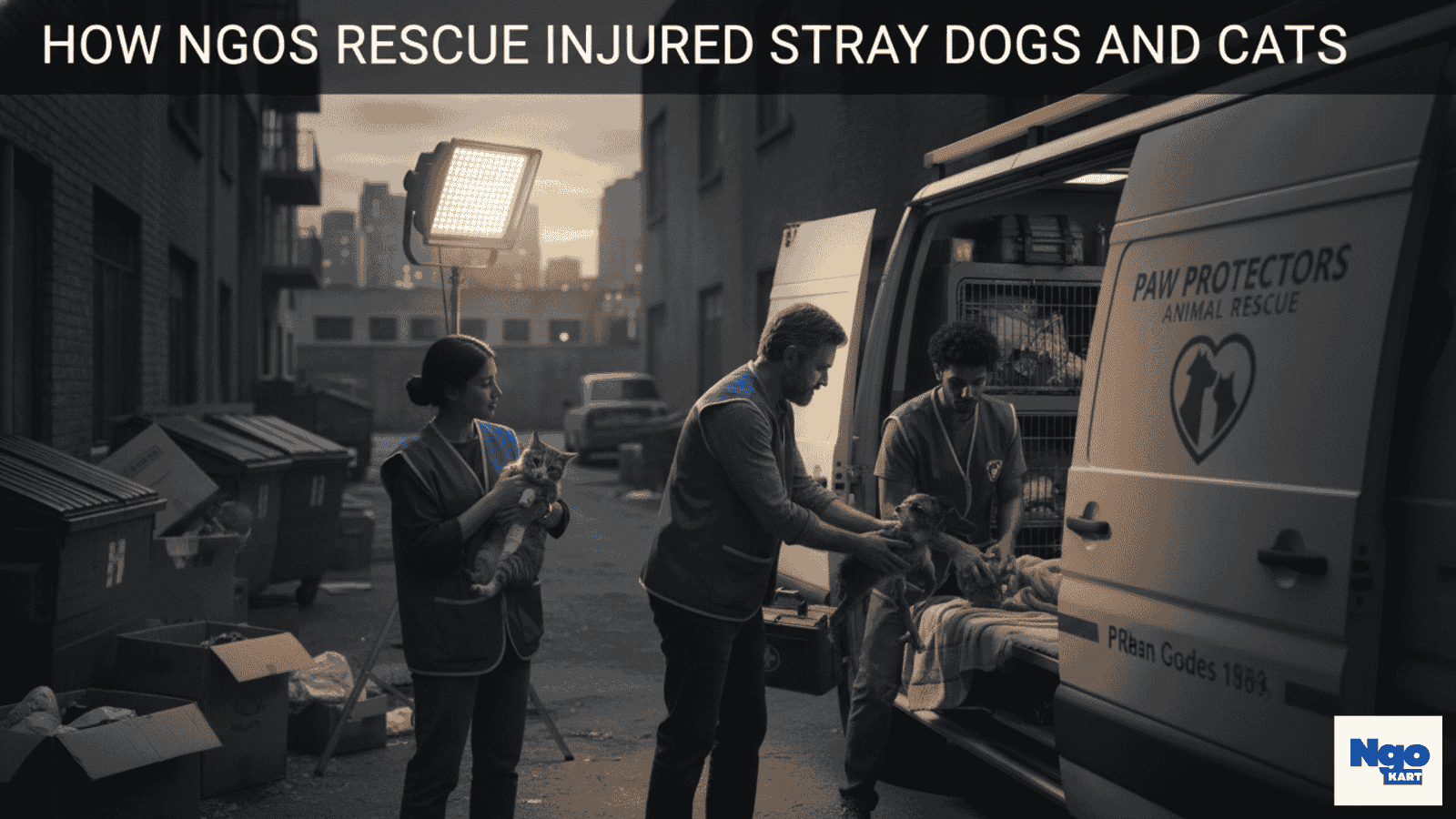
Every day, thousands of stray dogs and cats fight silent battles on the streets — battles against hunger, accidents, infections, cruelty, and loneliness. They do not have a voice to ask for help, but they feel pain just like any living being. In the middle of this suffering, NGOs step in as their protectors, guardians, and last hope. Their work is not just rescue; it is compassion in action.
This article explores how NGOs rescue injured stray animals, the challenges they face, and how their selfless work transforms lives. It also shows how each of us can play a small but meaningful role in supporting animal welfare.
The Silent Struggle of Street Animals
Stray dogs and cats suffer injuries for many reasons — road accidents, untreated wounds, animal fights, infections, cruelty, or simply old age. Most of these injuries go unnoticed because animals often hide their pain. For them, survival is a daily challenge, and every minute matters when they are hurt.
For these helpless animals, NGOs become the only chance of survival. A single rescue call can make the difference between life and death.
How NGOs Respond to Rescue Calls
Most rescues begin with a phone call, WhatsApp message, or social media alert from a concerned citizen. NGOs operate helplines and rescue teams that stay on standby to respond quickly.
Steps NGOs usually follow:
- Receiving a distress call: A volunteer or team member notes the location, condition, and details of the injured animal.
- Sending rescue volunteers: Trained animal handlers reach the spot with safety equipment.
- Gently securing the animal: Injured animals are scared and may react defensively. Rescuers use calm handling techniques to avoid causing further stress.
- Immediate first aid: Basic wound cleaning, bandaging, or stabilizing the animal before transportation.
- Transport to shelter or clinic: The animal is taken to an NGO shelter or partnered veterinary hospital.
Every rescue is unique, and rescuers often risk their own safety to help distressed animals. Their courage is the first gift an injured stray receives.
Medical Treatment at Animal Shelters
Once the injured dog or cat reaches the shelter, the medical team takes over. Their work is a combination of skill, patience, and deep empathy.
Common treatments provided include:
- Wound cleaning and dressing
- Splinting fractures
- Surgery for severe injuries
- Vaccination and infection control
- Nutritional support for weak animals
- Hydration therapy and pain management
For many animals, this is the first time they experience gentle hands, proper food, and a safe place to rest. Healing is not just physical — it is emotional.
The Emotional Recovery of Street Animals
An injured animal is not only in physical pain; it is scared, stressed, and confused. Kindness plays a big role in recovery. Volunteers spend time comforting animals, talking to them, feeding them by hand, and giving them the reassurance that they are safe.
The transformation is heartwarming. Dogs who once growled in fear begin wagging their tails. Cats who hid in corners start purring again. This emotional healing is often the first sign that the rescue mission is succeeding.
Rehabilitation and Adoption
After medical recovery, NGOs focus on rehabilitation — helping animals regain strength, mobility, and confidence. Some animals return to their original location if they are healthy, territorial, and cared for by local feeders.
However, many rescued animals are unable to survive street life again. For them, NGOs launch adoption campaigns.
Adoption efforts include:
- Social media posts to reach potential families
- Adoption drives at community events
- Screening adopters to ensure a safe home
- Post-adoption follow-up visits
Each adopted animal represents a new beginning — a life filled with comfort, care, and love.
The Challenges Faced by Rescue NGOs
The work is noble, but the challenges are enormous. Many NGOs operate with limited funds, limited manpower, and increasing rescue requests. Common challenges include:
- High medical expenses for surgeries and treatments
- Overcrowded shelters
- Lack of rescue vehicles
- Shortage of trained veterinary staff
- Low public awareness of animal welfare
- Cruelty cases and road accidents increasing yearly
Despite these struggles, NGOs continue because they refuse to give up on innocent lives.
How You Can Help in Animal Rescue
You don’t need to be an NGO worker to save a life. Simple acts of kindness can create huge impact.
Ways anyone can help:
- Call an NGO immediately if you see an injured dog or cat
- Offer clean water and food to strays
- Transport an injured animal if the NGO is far
- Donate for medical treatment or food
- Foster an injured animal during recovery
- Adopt instead of buying pets
- Spread awareness about animal rescue
Every small action counts. Even a 2-minute phone call can save a life.
Why Rescue Work Matters
When we help a helpless animal, we strengthen our humanity. Rescuing an injured dog or cat is not just about saving one life — it inspires others, creates compassionate communities, and builds a kinder world.
Animals may not speak our language, but they understand love, care, and safety. They remember the hands that helped them, the kindness that healed them, and the second chance that saved them.
Conclusion: Compassion Can Change the World
NGOs who rescue injured stray dogs and cats remind us that compassion is powerful. They heal bodies, restore trust, and give abandoned animals a future filled with hope. Their work proves that even in a fast-paced world, humanity is alive and strong.
By supporting rescue efforts, feeding strays, donating, or adopting a rescued animal, we contribute to a world where every life — big or small — is valued. In the end, animal rescue is not just about them. It is about us, and the kind of world we want to create.