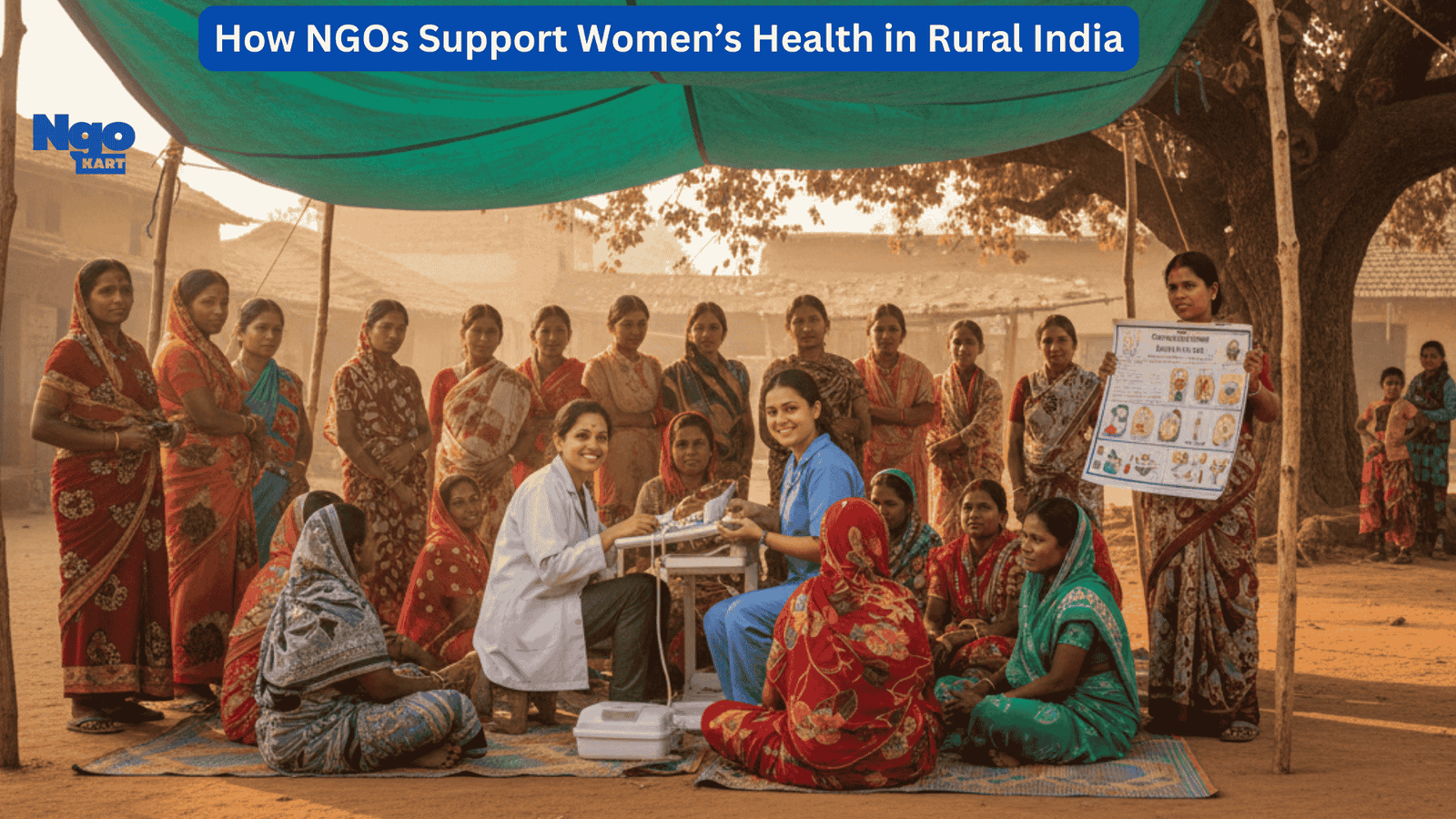
Women in rural India face many health challenges that often go unseen. They work long hours, care for families, and manage households—yet their own health is usually the last priority. Many women avoid hospitals because of distance, fear, lack of money, or social restrictions.
In these situations, NGOs become a lifeline. They bring healthcare, knowledge, dignity, and hope right into the heart of rural communities. Their work changes lives, builds confidence, and gives women the strength to care for themselves.
This article explains, in simple and emotional language, how NGOs support women’s health in rural India.
🌾 Why Women in Rural Areas Need Extra Support
Women in villages face unique challenges:
- Long distances to hospitals
- Lack of money for treatment
- Limited knowledge about health
- Social restrictions around reproductive health
- Poor nutrition
- Unsafe delivery practices
These challenges lead to serious issues like anemia, pregnancy complications, untreated infections, and chronic diseases.
NGOs step in to fill this gap with compassion and awareness.
🏥 Bringing Healthcare to Women Through Free Medical Camps
One of the biggest contributions NGOs make is organizing free medical camps in villages. These camps help women receive basic health checkups without traveling long distances.
Common services include:
- Blood pressure checks
- Diabetes screening
- Anemia testing
- Gynecological consultations
- Breast examination
- Thyroid testing
- Free medicines
These camps help detect problems early, which saves lives.
🤰 Supporting Pregnant Women and Safe Motherhood
Pregnancy can be dangerous in rural areas if not monitored properly. Many women do not receive prenatal care because of lack of awareness or facilities.
NGOs help by offering:
- Regular pregnancy checkups
- Nutritional supplements
- Awareness on safe delivery
- Information about government schemes
- Emergency support for high-risk pregnancies
They also encourage pregnant women to deliver babies in hospitals instead of at home, reducing the risk for both mother and child.
🍲 Fighting Anemia and Malnutrition Among Women
Anemia affects millions of rural women. It causes weakness, dizziness, and complications during pregnancy.
NGOs run nutrition programs that include:
- Iron and calcium supplements
- Healthy diet awareness
- Cooking demonstrations
- Distribution of protein-rich food
- Workshops on affordable nutrition
These programs help women feel stronger and live healthier lives.
🩺 Menstrual Health Education and Hygiene Support
In many villages, menstruation is treated as a taboo. Girls are taught to stay silent, and women often use unsafe materials because they cannot afford sanitary pads.
NGOs work to break this silence.
They provide:
- Menstrual hygiene awareness sessions
- Free or low-cost sanitary pads
- Training to make reusable cloth pads
- Education about menstrual health and period myths
This not only improves health but also builds confidence and dignity.
👩⚕️ Educating Women About Reproductive Health
Many women do not know basic information about their own bodies, reproductive system, or symptoms that should never be ignored.
NGOs conduct workshops on:
- Family planning
- Sexual health
- Reproductive infections
- Cervical and breast cancer awareness
- Early detection of serious diseases
Knowledge empowers women to make safe decisions for their bodies.
🧠 Mental Health Support for Rural Women
Rural women experience emotional stress from family responsibilities, financial problems, and social pressure. Yet mental health is rarely talked about openly.
NGOs provide:
- Counselling sessions
- Support groups
- Stress management workshops
- Safe spaces for women to speak freely
These programs give women emotional strength and reduce loneliness.
📚 Training Community Health Workers (ASHA & Local Volunteers)
NGOs often train local women to become community health workers, who act as health ambassadors in their villages.
Their responsibilities include:
- Visiting homes
- Identifying health risks
- Guiding pregnant women
- Spreading awareness
- Supporting vaccination drives
- Connecting families with hospitals
This system ensures continuous community support, even when NGOs are not physically present.
🚑 Helping Women Access Hospitals and Government Schemes
Many women do not know about the government programs that can support them. NGOs help bridge this gap.
They assist women with:
- Registering for health schemes
- Transportation to hospitals
- Follow-up care
- Medical documents
- Emergency referrals
This makes healthcare accessible for even the poorest families.
🌟 Building Confidence and Breaking Social Barriers
Women often hesitate to speak about their health due to shyness or fear. NGO programs create safe environments where women can learn, talk, and ask questions.
Over time, women gain:
- Confidence
- Knowledge
- Awareness
- Freedom to seek medical help
This change is powerful—it transforms families and entire communities.
💚 Real Impact of NGO Work in Rural Women’s Health
The support NGOs provide leads to:
- Lower maternal deaths
- Healthier pregnancies
- Better nutrition
- Reduced anemia rates
- Safe menstrual hygiene practices
- Early detection of diseases
- Improved mental health
- Stronger communities
For many women, NGO support is not just help—it is hope.
🤝 How You Can Support NGO Work for Rural Women
Anyone can help by:
- Donating hygiene kits
- Sponsoring a health camp
- Supporting nutrition programs
- Volunteering time or skills
- Sharing NGO initiatives online
- Funding medicines or tests
Even a small contribution can create a big change.
💛 Final Thoughts
Women are the backbone of rural India. When women stay healthy, entire communities grow stronger. NGOs play a life-changing role by ensuring women have access to healthcare, knowledge, and dignity.
Their work brings light to places where help is rare and hope is fragile. Every health camp, every counselling session, every awareness workshop becomes a step toward a healthier future for rural women.
Supporting these NGOs means supporting stronger families, educated communities, and a healthier India.