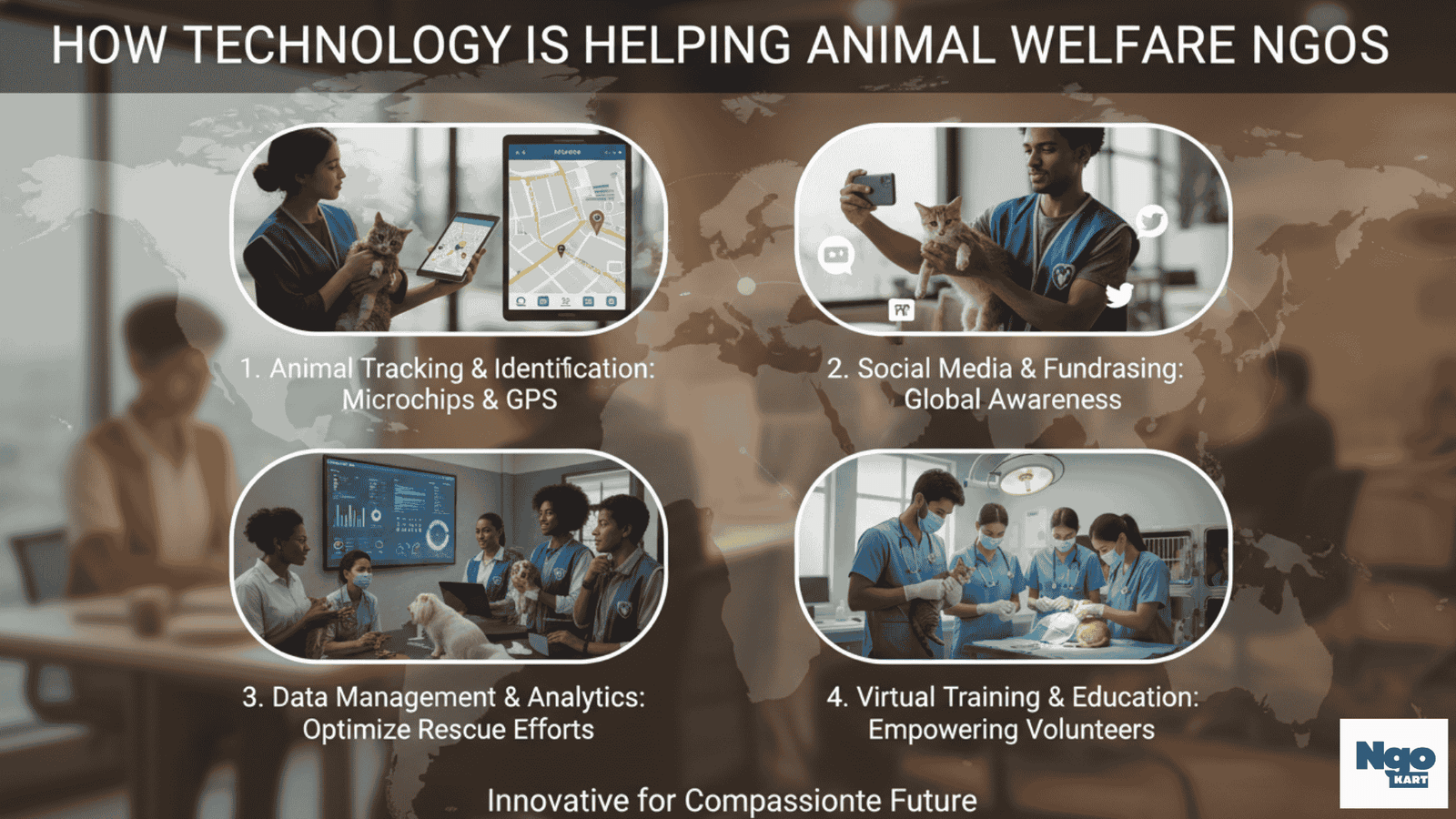
In a world where technology touches almost every part of our lives, it is heartwarming to see how it is also transforming the lives of animals who cannot speak for themselves. For years, animal welfare NGOs have worked tirelessly to rescue injured animals, run shelters, find adoptive families, and spread awareness. Today, technology is amplifying their impact, making their work faster, smarter, and more powerful than ever before.
From mobile apps to GPS tracking, from digital fundraising to virtual adoption campaigns, technology is helping NGOs save more lives, connect with more people, and build a future where animals receive the care they deserve.
The Silent Struggle: Why Innovation Matters
Animal welfare work has always been challenging. Stray animals suffer from accidents, hunger, neglect, and illnesses. NGOs often face limited resources, delayed rescue requests, difficulty in tracking recovered animals, and a constant shortage of funds. Technology gives them the tools to overcome these barriers and work more efficiently.
Most importantly, it helps bridge the gap between compassionate people and animals needing help — a connection that saves lives every day.
1. Mobile Apps for Rescue Calls and Reporting
One of the biggest challenges NGOs face is timely information. Mobile apps and online reporting systems allow citizens to send:
- Rescue requests
- Photos and videos of the injured animal
- Live location pins
- Updates on the animal’s condition
This real-time information enables rescue teams to respond faster and reach animals before it is too late.
2. GPS Tracking for Monitoring Released Animals
After treatment and recovery, many stray dogs and cats are released back into their familiar locations. Technology like GPS collars helps NGOs:
- Monitor animals after surgery
- Track movement patterns
- Identify safe and unsafe zones
- Prevent them from getting lost or harmed
This monitoring ensures that animals stay safe even after they return to the streets.
3. Digital Medical Records for Better Treatment
NGOs often treat hundreds of animals every month. Keeping track of every case can be overwhelming. Digital medical records help shelters maintain:
- Vaccination histories
- Surgery details
- Medication schedules
- Recovery progress
With this system, veterinarians can make faster, more accurate decisions — improving the overall quality of care.
4. Social Media for Awareness and Adoption
Social media platforms like Instagram, Facebook, YouTube, and Twitter have become powerful tools for NGOs. With one post, they can reach thousands of people who may:
- Adopt a rescued dog or cat
- Donate for food, medicine, or surgery
- Report an injured animal
- Volunteer at the shelter
Heartwarming rescue stories, before-and-after transformations, and adoption appeals spread faster than ever — turning awareness into action.
5. Online Fundraising and Donation Platforms
Donations are the lifeline of animal welfare NGOs. Technology has made fundraising accessible and transparent through:
- Crowdfunding websites
- UPI donations
- Online charity platforms
- QR code donation systems
These platforms allow anyone to support an animal in need instantly, no matter where they are.
6. AI and Data Analytics for Managing Populations
Artificial Intelligence (AI) is helping NGOs understand stray animal populations better. Data analytics provides insights such as:
- Which areas have the highest number of strays
- Patterns of injuries or accidents
- Where sterilization drives are most needed
- Seasonal trends in diseases
With this information, ABC (Animal Birth Control) programs become more effective, organized, and impactful.
7. Telemedicine for Remote Veterinary Support
Not every village or town has access to veterinary doctors. Telemedicine platforms allow vets to guide rescuers and caregivers through:
- Emergency first aid
- Wound treatment
- Medication suggestions
- Post-operative care tips
This timely support can save countless lives, especially in remote areas.
8. Virtual Adoption Events
During times when physical adoption drives are difficult, NGOs rely on virtual adoption campaigns. Through live videos, photos, and personality profiles, people can meet adoptable dogs and cats online.
This digital approach has led to faster adoptions and greater visibility for animals that would otherwise be overlooked.
The Emotional Side of Innovation
Behind every tool and app, there is a story — a puppy rescued in time because someone shared a location pin, a cat recovering well because its medical history was digitally recorded, a dog finding a loving home through a viral social media post.
Technology does not replace compassion; it strengthens it. It connects hearts, speeds up help, and ensures that no cry for help goes unnoticed.
How You Can Support Tech-Driven Animal Welfare
As a compassionate individual, you can:
- Report injured animals through NGO apps
- Share adoption posts online
- Donate digitally for surgeries and rescues
- Promote animal welfare apps in your community
- Encourage friends to follow NGO pages
Your involvement may be small, but your impact is huge.
Conclusion: Technology + Compassion = A Better World
Technology is not just shaping the future — it is saving lives today. For animal welfare NGOs, it acts as a bridge between compassion and action. With better rescue systems, improved medical care, faster adoptions, and stronger community support, technology is helping NGOs achieve what once felt impossible.
When innovation meets kindness, miracles happen. And every rescued dog, every healed cat, every successful adoption is proof that we are moving toward a more humane and compassionate world.