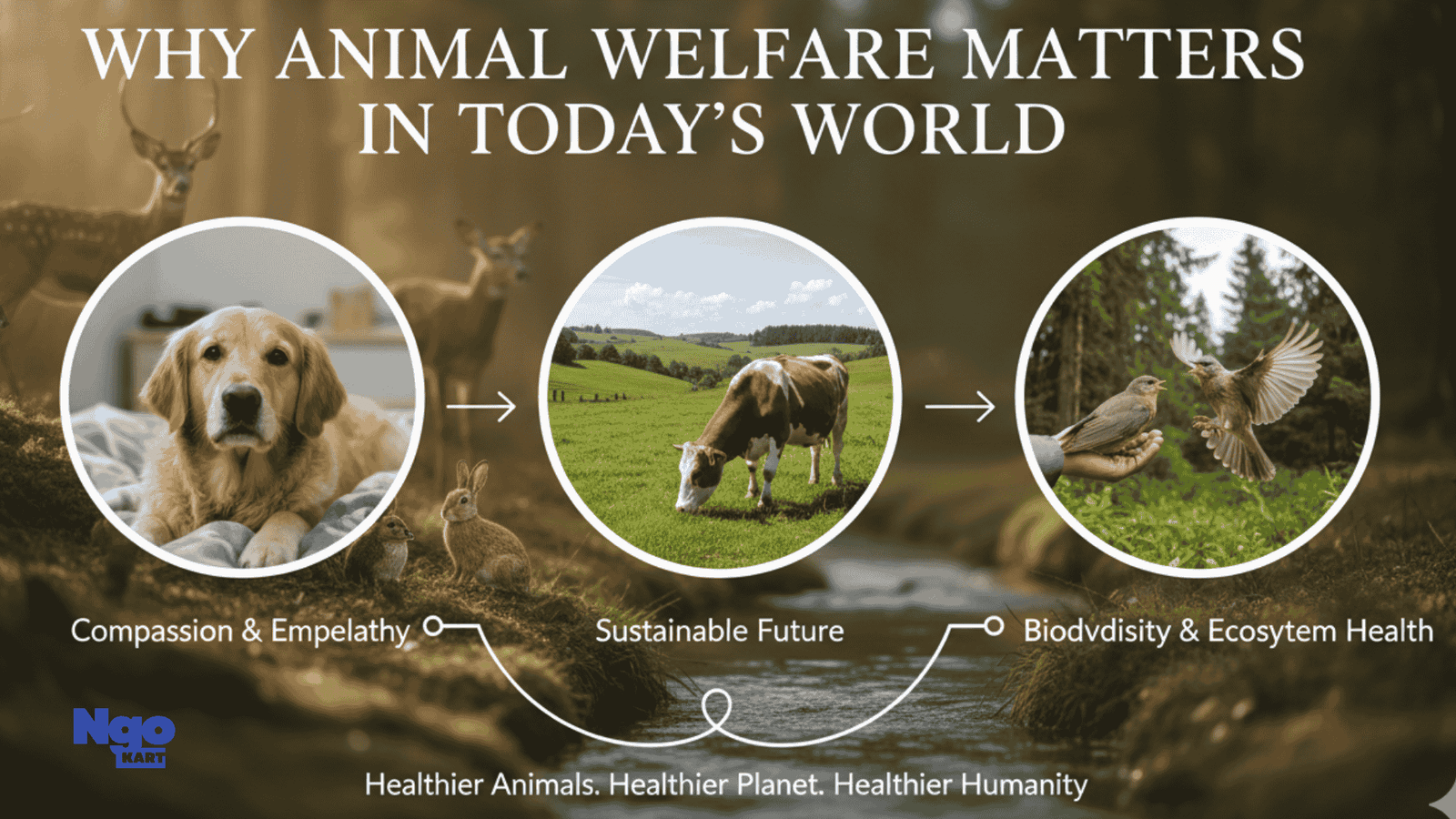
In a world that celebrates progress, innovation, and development, there is one measure of humanity that often gets overlooked — how we treat the animals who share this planet with us. From the loyal street dogs waiting for a kind meal, to abandoned animals in need of care, to the cows and cattle that support rural families, every life matters. Animal welfare is not just a charity effort; it is a reflection of compassion, responsibility, and the values we choose to carry forward as a society.
The Moral Responsibility We All Share
Animals feel hunger, fear, pain, and affection just like humans do. Yet millions suffer silently every day — hit by vehicles, left without food, or abandoned due to illness or age. When we speak about animal welfare, we speak about standing up for those who cannot speak for themselves. It is not just kindness; it is humanity at its purest form.
Every small act — offering food, providing clean water, rescuing an injured stray, or supporting a local animal shelter — creates ripples of compassion. These actions show younger generations that empathy is a strength, not a weakness.
The Role of NGOs and Animal Shelters
Across the world, thousands of animal welfare NGOs work tirelessly to rescue injured animals, provide medical treatment, run shelters, feed stray dogs and cows, and create awareness about responsible pet care. Their teams work day and night, often with limited resources, just to make sure that one more animal gets a second chance at life.
These organizations ensure:
- Rescue and treatment of injured or abandoned animals
- Feeding programs for street dogs, cats, and cows
- Sterilization drives to control animal population humanely
- Adoption programs to help animals find loving homes
- Awareness campaigns against cruelty and neglect
Without these NGOs, countless animals would go unnoticed and untreated. Supporting them means supporting life, compassion, and dignity.
The Impact of Stray Animals in Our Communities
Stray animals are not nuisances; they are part of the ecosystem of our cities and villages. They guard neighborhoods, keep waste in check, and form emotional bonds with the people who feed them daily. Many families survive emotionally because of the love and companionship of a rescued pet.
When we feed a stray dog, give water to a thirsty cow, or help an injured animal reach a shelter, we are strengthening our entire community. Compassion makes neighborhoods safer, kinder, and more connected.
Why Animal Welfare Is Important for Public Health
Taking care of animals also helps create healthier communities. When stray animals are vaccinated, sterilized, and well-fed, it reduces aggression, disease transmission, and population growth. Healthy animals mean safer streets.
Animal welfare is closely linked with:
- Better community hygiene
- Reduced zoonotic diseases
- Cleaner public spaces
- Healthier livestock and rural productivity
A society that cares about animals naturally becomes safer and healthier for humans too.
The Emotional Impact: Animals Heal Us in Ways We Don’t Realize
Animals have an extraordinary ability to heal. A wagging tail, a gentle purr, or the silent companionship of a grazing cow can bring peace even in difficult times. Numerous studies show that caring for animals reduces stress, anxiety, and loneliness.
But beyond science, there is something deeper — animals remind us how to love without expectations. They offer loyalty, trust, and comfort, even when life gets overwhelming.
How We Can All Make a Difference
Animal welfare is not limited to activists or NGOs. Every individual has the power to create change. You can:
- Feed a stray dog or cow when possible
- Keep a water bowl outside your home during summers
- Support local animal shelters or NGOs
- Adopt instead of buying pets
- Report cases of animal cruelty
- Take injured animals to nearby veterinary clinics
Even the smallest act of kindness can save a life. What matters is the intention and the heart behind it.
Animal Welfare Is a Reflection of Who We Are
The way we treat animals reflects the type of society we are building. A kind, compassionate world does not happen by accident — it is built through conscious choices, consistent actions, and the belief that every living being deserves dignity.
When we protect animals, we protect the values that make us human. We build a better world not just for them, but for ourselves and future generations.
Conclusion: Compassion Is the Foundation of a Better World
Animal welfare matters because life matters — not just human life, but all life. In today’s fast-paced world, where competition often replaces compassion, choosing kindness becomes an act of courage. Whether it is feeding a stray, supporting a shelter, or simply raising awareness, every action counts.
Animals may not express their gratitude in words, but their healing, trust, and love speak louder than anything else. When we stand for them, we stand for a kinder, more compassionate world — a world worth living in.